
Skip to content

(It's not just you)

You worked hard. You graduated. You did an unpaid internship. Then you applied to 100 jobs and heard... nothing. In many cases, no human even saw your application— an algorithm rejected it first.

You aren't alone. AI is quietly reshaping the job market from both sides: automating entry-level work you prepared for while filtering you out of the ones that remain. Our mission is to help you understand what's happening across America and use the same technology to fight back.

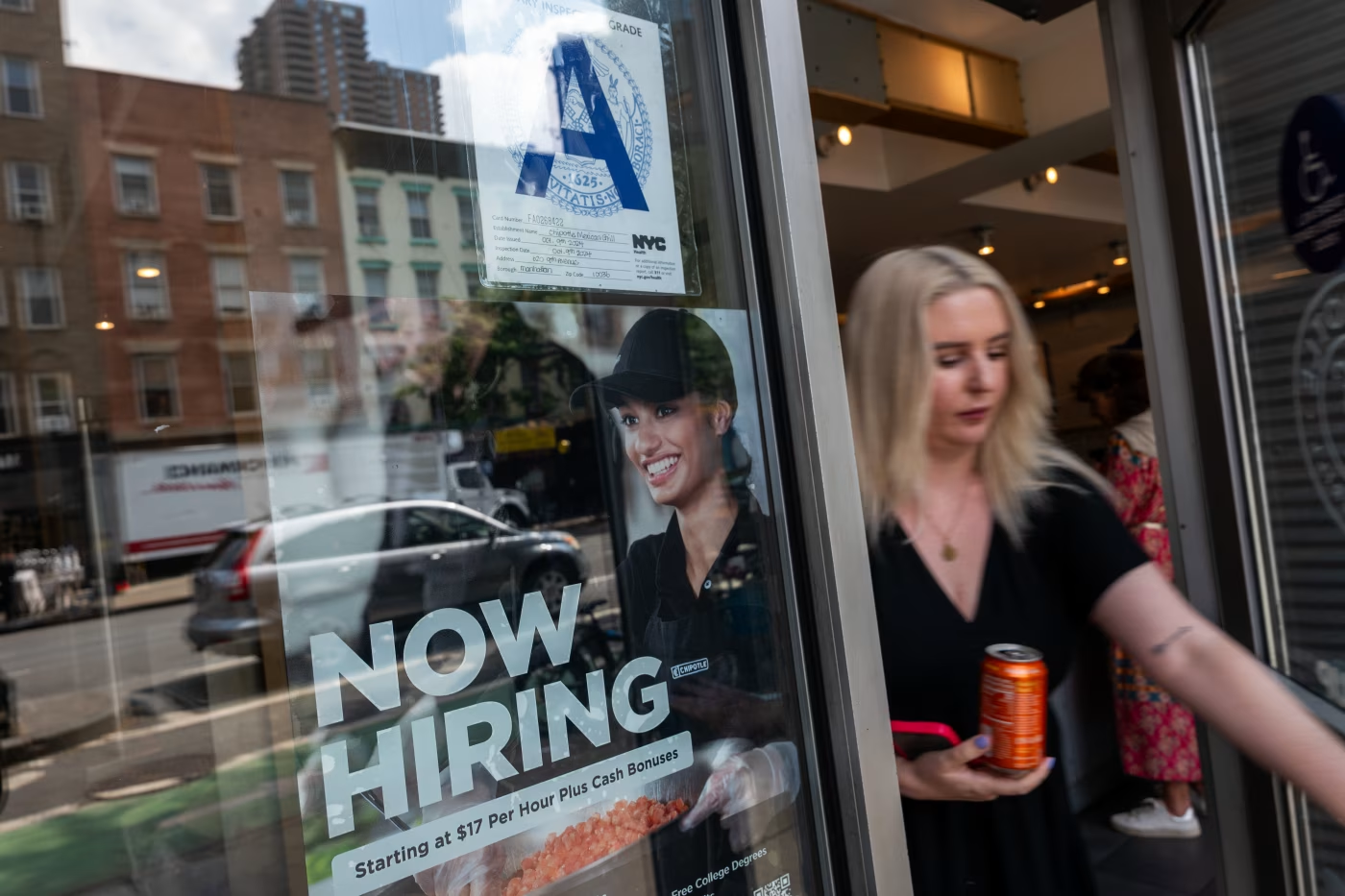
One in four people looking for work has been unemployed for at least six months.

One in four people looking for work has been unemployed for at least six months. SOURCE: WALL STREET JOURNAL/Spencer Platt/Getty Images

5.8%
new grad unemployment rate
-17%
entry-level jobs since 2019
42%
recent grads underemployed

"Since earning her degree, Madia has applied for more than 300 jobs. Despite two internships, a strong GPA, and student loans, she remains unemployed. She told CNN she felt unprepared... not because she hadn’t worked hard, but because the market she’d prepared for no longer exists."

Source: CNN Business, “Degree in Hand, Jobs Out of Reach,” January 2025

How AI is changing entry-level jobs

The next decade will change our economy in ways that are hard to imagine. On one hand, the stability that college graduates have traditionally taken for granted is diminishing. On the other hand, AI makes it much easier to learn, acquire skills and jobs outside of your major, and get things done. 

Careers are becoming more personal and entrepreneurial. Fewer people will climb the corporate ladder. More will become free agents and start small businesses, using AI to scale impact. Everyone will need to continuously upskill as AI evolves.

Marketing

AI can now auto-generate copy and visual assets, shifting entry-level marketers from content creation to data-driven campaign orchestration and prompt engineering.

Software Engineering

Developers are pivoting from writing boilerplate code to reviewing and integrating AI-generated components and agentic systems.

Finance

Analysts are moving away from manual data entry and spreadsheets toward interpreting AI-generated performance and risk assessments.

Gemini_Generated_Image_x6zfmpx6zfmpx6zf

Real stories from the market

The CS major who's bartending, the MBA processing returns at Costco, the poli sci grad who watched her AmeriCorps position get defunded on Zoom. The messy, honest, non-LinkedIn version of what's really happening.
Hear their stories
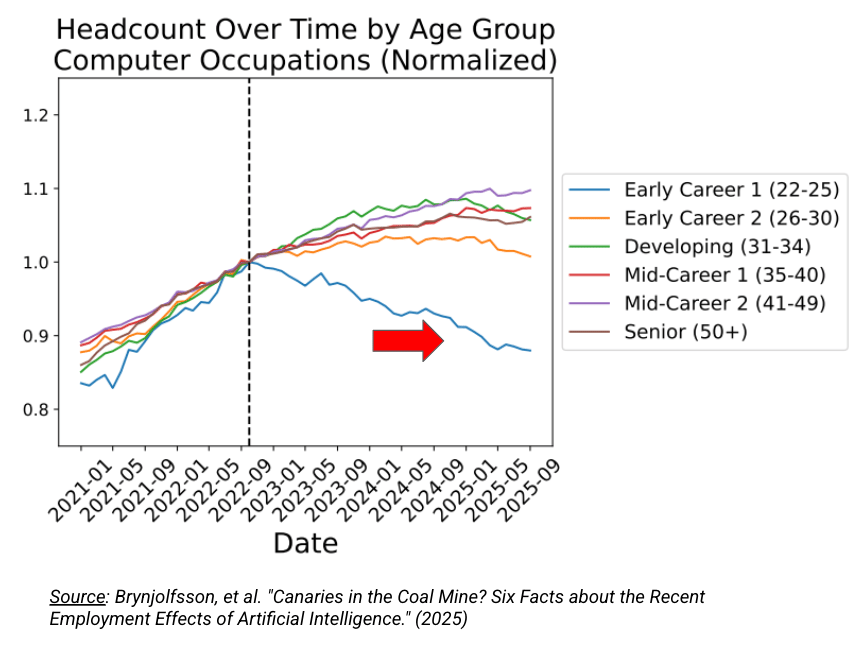
Graph of # computer jobs by age group

Understand what's happening

Which jobs are the most exposed to AI? Which sectors are hiring more entry-level workers? Learn about the 6M+ job openings in the U.S. so you can position yourself to get hired. 

Explore
Learning mode

Make AI work for you

AI took the job you were training for. Learn to use it, and you'll own your future.

Learning resources
7M+
unemployed Americans (Bureau of Labor Statistics)
6-7%
US jobs at risk of full AI displacement (Goldman Sachs)
1M+
"new collar" AI job postings in 2026 (LinkedIn)

The map has changed. We'll help you read it.